
Training for Seniors (60+): Strength, Balance and Independence
How training for seniors 60+ builds strength, balance and independence and prevents falls. A practical guide from my work in Sarajevo and online.
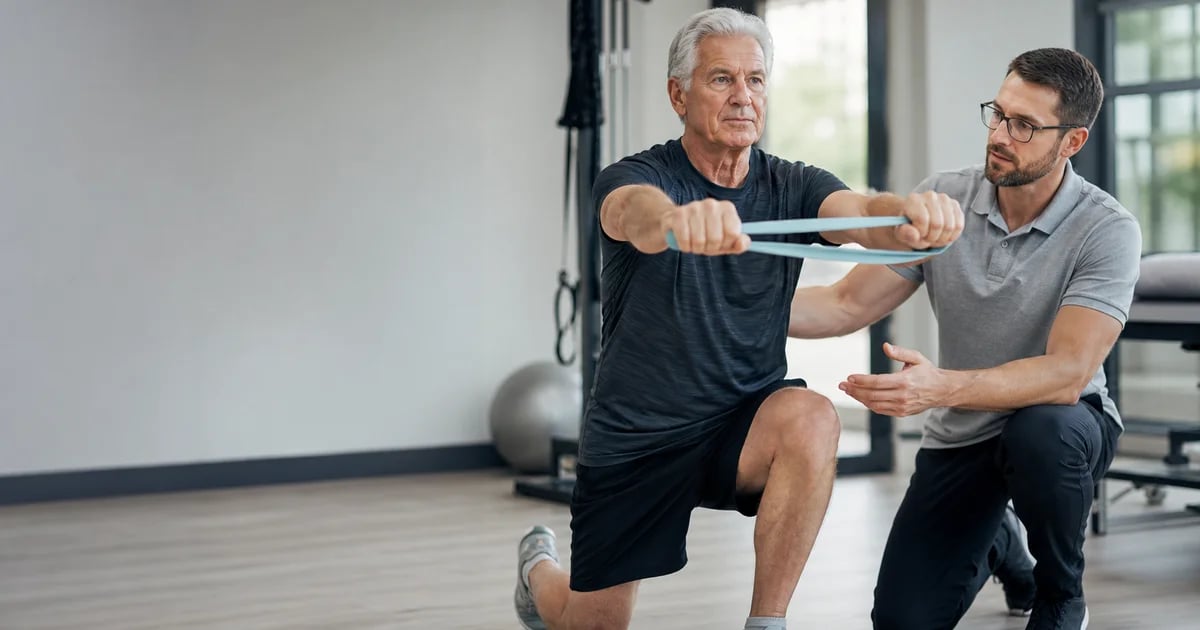
My name is Amir Ferhatović, a personal trainer from Sarajevo based in Vogošća. In more than 10 years of work I have guided over 100 people through change, and many of them are clients in their sixties, seventies and beyond. Their goal is rarely how they look. They want to get up from a chair more easily, carry groceries up the stairs, and not fall. That is training that gives independence back, and it shows how much strength and balance mean in daily life.
Short answer
After sixty the body loses muscle and balance faster than before, but that process can be slowed and largely reversed with training. A few short strength sessions a week, plus balance work, protect independence and drastically lower the risk of a fall. Everything is done gradually, with support when needed, and adapted to each person's health.
Why strength after sixty decides your independence
From around thirty the body slowly loses muscle, and after sixty that loss speeds up. Less muscle means weaker legs, harder standing up, and a less steady walk. That is exactly what leads people toward losing independence, because when the legs weaken, every stair and every chair becomes an obstacle.
The good news is that muscle responds to training at any age. I have seen people in their seventies start standing up again without armrests within a couple of months. The body does not know how old you are, it only knows how much you use it.
Balance and fall prevention
A fall is the biggest risk for an older person. One bad fall can end independent living. That is why balance is not an add-on to training but one of the main goals.
- Standing on one leg. First with support, then without, it builds ankle and hip stability.
- Weight shifting. Controlled shifting of weight from leg to leg teaches the body to hold itself while walking.
- Standing up from a chair without hands. A simple exercise that directly restores a real daily-life ability.
- Strengthening legs and hips. Stronger legs mean less stumbling and a safer step on uneven ground.
We always train balance safely, near a wall or a chair, so there is never a real risk of falling during the exercise itself.
What training for 60+ looks like
You do not need a gym full of machines or heavy weights. A big part of the work is your own bodyweight, resistance bands and light dumbbells. The session is short, usually 30 to 45 minutes, because regular and clean beats long and exhausting.
The focus is on movements from daily life: standing up, bending down for something, carrying, walking up stairs. When those get stronger, everything in your day becomes easier. That is what clients notice first, before any change in the mirror.
Training with health conditions
Most people at this age have something: high blood pressure, arthritis, old injuries, a replaced joint. None of that is a reason not to train, but a reason to train smart. Before we start I ask for your history and, when needed, your doctor's opinion, and I build the plan around it. We pick exercises that strengthen the body without loading painful or sensitive spots.
If you have high blood pressure, we avoid holding your breath and straining. If you have arthritis, we choose movements that do not irritate the joint. Everything can be adapted.
What a training week looks like
For most people at this age, two to three short sessions a week give an excellent result. Between them there are enough days to recover, because after sixty the body recovers more slowly and that has to be respected.
- Strength training. Twice a week we strengthen the legs, hips and upper body, all from movements you use every day.
- Balance. Short balance drills go in almost every day, because balance is built through repetition.
- Walking. Regular walking keeps the heart and legs in shape and fits easily into the day.
The first changes are felt quickly. Most clients notice within two to three weeks that they get up more easily and move more confidently. That is the motivation that keeps you going.
How to start safely
The most important step is to start with someone who knows how to adapt training to your body and age. I train clients live in Vogošća and online across Bosnia, so I can guide you wherever you or your parent live. Many clients reach me through their children, who want their parent to stay mobile and independent. If you want strength, a safer step, and independent living for as long as possible, get in touch and we will build a plan made for you.
FAQ
- Can I start training after sixty?
- Absolutely. Muscle responds to training at any age, and I have seen people in their seventies regain strength and a steadier walk within a couple of months. What matters is starting gradually and with a plan adapted to your health.
- How does training help me prevent falls?
- Falls are the biggest risk at this age, and they drop when you strengthen the legs and hips and do balance work like standing on one leg. Stronger legs and better balance mean a safer step on stairs and uneven ground.
- Do I need a gym and heavy weights?
- No. Much of the work is your own bodyweight, resistance bands and light dumbbells, and a session lasts 30 to 45 minutes. The focus is on daily-life movements like standing up, carrying and walking up stairs.
- Can I train if I have high blood pressure or arthritis?
- Yes, with an adapted plan. Before we start I ask for your history and, if needed, your doctor's opinion, then we choose exercises that strengthen the body without loading painful spots or straining in a way that raises blood pressure.