
Arthritis and Training: Exercising Safely With Joint Pain
How to exercise safely with arthritis and joint pain, which low-impact exercises help and what to avoid. A practical guide from my work in Sarajevo.
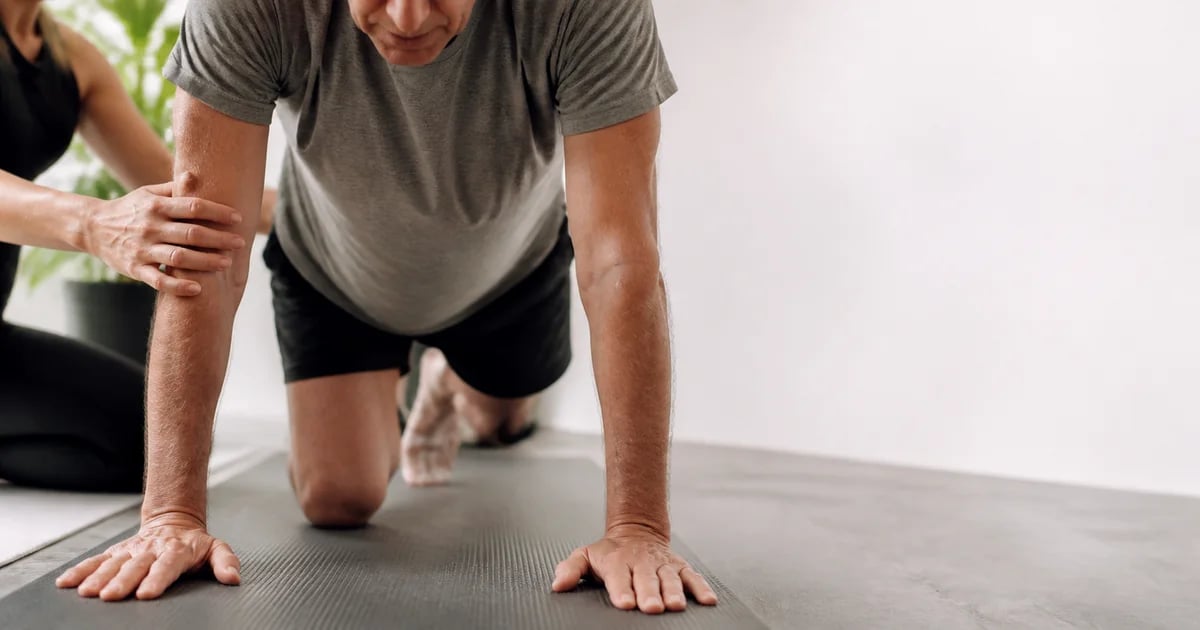
My name is Amir Ferhatović, a personal trainer from Sarajevo based in Vogošća. In over 10 years of work, a big part of my clients are people who train with a medical condition, and arthritis is one of the most common. People come in scared, because they think training will damage a joint that already hurts them. The truth is that proper exercise with arthritis usually reduces pain rather than increasing it. The key is the right choice of exercises and dosing.
Short answer
With arthritis the joint feels better when the muscle around it is strong and when the joint is moved regularly through its full range. A weak muscle leaves the joint without support, so every step hurts more. That is why we pick low-impact exercises that strengthen muscle and lubricate the joint without impact and jerks. You train in the zone without sharp pain, gradually and regularly.
Why exercise helps with arthritis
In osteoarthritis the cartilage that protects the joint wears down, so the bones take more pressure. When the muscle around the joint is strong, it takes on part of that pressure and unloads the joint itself. That is why a strong leg means less knee pain and a strong hip means less hip pain. It is one of the reasons people who exercise regularly with arthritis function better than those who stop moving out of fear.
Movement itself helps the joint. When a joint moves, it lubricates better and stays mobile. Rest does the opposite: the joint stiffens, the muscle weakens, and the pain gets worse over time.
Low-impact exercises that help
- Strength training with control. Strengthening the muscle around a painful joint unloads the joint itself. We work slowly, without jerks.
- Cycling and the stationary bike. They move the knee and hip through a full range without impact on the ground.
- Water exercise or swimming. Water carries part of your weight, so the joint works without pressure while the muscle still gets stronger.
- Mobility work. Gentle movement of the joint through its full range reduces morning stiffness and restores mobility.
We start all of this with light load and a low number of reps, then add as the joint responds. We also measure progress by how much less it hurts in daily life.
What to avoid with joint pain
Some movements irritate the joint unnecessarily. We avoid them or swap them for a gentler version.
- Impact exercises. Running on hard ground, jumping and landings load a painful joint with every rep.
- Deep movements through sharp pain. Mild discomfort is fine, sharp stabbing pain is not. We work within the range the joint allows.
- Too much load too soon. Suddenly heavy weights on a joint that is not ready are the fastest road to inflammation.
The difference between pain that is a warning sign and the normal discomfort of effort is something we learn together in the first sessions.
Warm-up and morning stiffness
People with arthritis usually feel worst in the morning. The joint is stiff, hard to move, and it feels like training that day makes no sense. The truth is that gentle movement reduces that stiffness rather than increasing it.
That is why with arthritis we never jump straight into harder exercises. First come gentle movements through the full range, a little walking or cycling, until the joint warms up and lubricates. Once the body wakes up, the joint moves much more easily and the pain is smaller. That warm-up is an important part of the session, not something skipped when time is short. I often tell clients that the first ten minutes decide how the rest of the session goes.
Training during a joint flare-up
Arthritis has good days and bad days. When a joint is inflamed, swollen and hot, we do not push through it. Then we do gentle mobility and exercises for other parts of the body until the inflammation settles. When the joint moves into a calmer period, we return to strengthening. That flexibility, where the plan changes according to how the joint feels that day, is why guided training with arthritis gives better results than blindly copying a program.
How working with me looks
Before we start I ask which joint hurts, for how long, and your history plus test results if needed. I build the plan around that: low-impact exercises, gradual load, and constant tracking of how the joint responds. I train clients live in Vogošća and online across Bosnia, so I can guide you wherever you live. If your joints hurt and you want to move without fear, get in touch and we will build a plan made for you.
FAQ
- Am I allowed to exercise if I have arthritis?
- Yes, and it usually helps you. Proper exercise strengthens the muscle around the joint and unloads the joint itself, so the pain usually eases over time. The key is low-impact exercises, working without sharp pain, and gradual load.
- Which exercises are best for joint pain?
- Low-impact exercises work best: controlled strength training, cycling, water exercise and mobility. They strengthen muscle and move the joint through its full range without impact and jerks that irritate a painful joint.
- Should I stop training when a joint is inflamed?
- When a joint is inflamed, swollen and hot, we do not push through it but do gentle mobility and exercises for other parts of the body. When the inflammation settles, we return to strengthening. The plan changes according to how the joint feels that day.
- Can training make arthritis worse?
- The wrong training can, for example impact exercises and too much load too soon. That is why we choose the right exercises, work in a range without sharp pain, and add weight gradually. Proper training usually reduces pain and restores mobility.