
Osteoporosis and Strength Training: How to Safely Build Bone
How strength training builds bone with osteoporosis, which exercises are safe and which to avoid. A practical guide from my work with menopausal women and seniors.
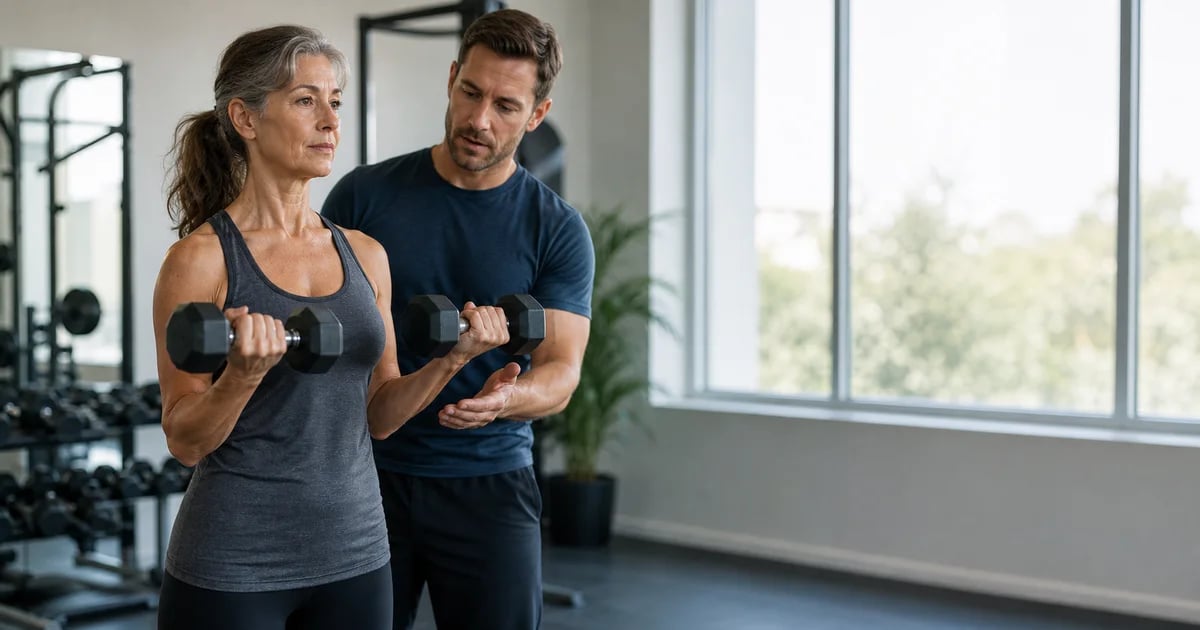
My name is Amir Ferhatović, a personal trainer from Sarajevo based in Vogošća. I have more than 10 years in fitness and over 100 transformations behind me, and a big part of my work is people who train with a medical condition. Osteoporosis is one of them. Women in menopause and older clients come to me after a doctor tells them their bone density is low, and they are afraid training will make it worse. The truth is the opposite: proper strength training is one of the best ways to make bone stronger.
Short answer
Bone is living tissue that reacts to load. When a muscle pulls on bone and when you load it with weight, the body gets the signal to build denser, stronger bone. That is why strength training and weight-bearing work lower your fracture risk. The key is to progress gradually, use good technique, and avoid movements that bend the spine under load.
Why bone reacts to training
Bone constantly builds new tissue and breaks down old tissue. When you barely load your body, breakdown wins and bone weakens. When you load it regularly, building wins and bone gets denser. You see this clearly in people who lift heavy things their whole life and in athletes. Their bones are stronger exactly in the areas they load.
This is why walking and swimming, as healthy as they are, do not do enough for bone. Swimming has no weight-bearing load, and walking is too light to force bone to change. Strength training and exercises where you carry your own weight are what make the difference.
Exercises that build bone
- Squats and variations. They load the hips and spine safely, and the hip is the most common site of dangerous fractures in older people.
- Presses and rows. They strengthen the bones of the arms, shoulders and upper back, which often give way first.
- Loaded walking. Carrying weights in your hands or a weighted vest gives bone a signal that plain walking usually does not.
- Balance work. It does not build bone directly, but it protects you from the fall that breaks bone. With osteoporosis, the fall is the main enemy.
We start all of this light. For the first few weeks we learn technique with little or no load, then add weight slowly, week by week.
What to avoid with osteoporosis
Some movements raise the risk of a spinal fracture when the spine is weak. We avoid them or swap them for a safer version.
- Bending the spine under load. Full crunches with rotation and loaded forward bending are not for someone with osteoporosis.
- Sudden jumps and jerks. Landing on hard ground and explosive movements are a risk until bone is ready.
- Exercises that demand great balance with no support. If there is a fall risk, we train with support until stability is built.
This does not mean training is dangerous. It means we pick the right version of the exercise for your body, instead of blindly copying someone else's program.
Women in menopause and extra care
After menopause the drop in estrogen speeds up bone loss, so women in that period lose density faster than men. That is why most women in this age group come to me with a diagnosis of weak bone. The good news is that strength training works precisely then. A few sessions a week with gradual load slow the loss and in many cases return some density.
Alongside that we look at enough protein and, in agreement with your doctor, calcium and vitamin D. Training builds bone, but it needs fuel.
How fast results come
Bone changes more slowly than muscle, so this takes patience. Strength and confidence in movement usually show up within a few weeks, and that is the first thing clients notice. They fear stairs less, get up more easily, stand more firmly on their legs.
Bone density itself changes over months, not weeks. A follow-up density scan is usually done once a year, and that is the real measure. So we do not chase speed, we chase consistency. Someone who trains regularly for two years has bone in far better shape than someone who quits after a month. With osteoporosis, the worst plan is the one you stop.
How working with me looks
Before any load I ask for your test results and history. If you have a diagnosis of osteoporosis, I build the plan around it: safe exercises, gradual load, and constant tracking of how you feel. I train clients live in Vogošća and online across Bosnia, so I can guide you wherever you live. If you want stronger bones and a lower fracture risk, get in touch and we will build a plan made for you.
FAQ
- Is strength training safe if I have osteoporosis?
- Yes, with the right approach it is one of the best ways to strengthen bone. The key is to start light, use good technique, and avoid bending the spine under load. That is why I ask for your test results before we build a plan.
- Can training bring back lost bone density?
- Strength training slows the loss and in many cases returns some density, especially in menopausal women and older adults. Bone is living tissue that reacts to load, so regular, gradual training gives it the signal to build stronger tissue.
- Which exercises should I avoid with osteoporosis?
- Avoid bending and rotating the spine under load, sudden jumps and hard landings, and high fall-risk exercises with no support. Instead we use safer versions that strengthen bone just as well without risk to the vertebrae.
- How many times a week should I train for stronger bones?
- For most people two to three strength sessions a week give an excellent effect on bone. On top of that we add balance work to reduce the risk of a fall, which is the main cause of fractures with osteoporosis.