
Exercises for a Herniated Disc & Low Back Pain
A calm, practical guide to exercises for a herniated disc and low back pain, covering what to avoid, safe core and hip work, and when to see a professional.
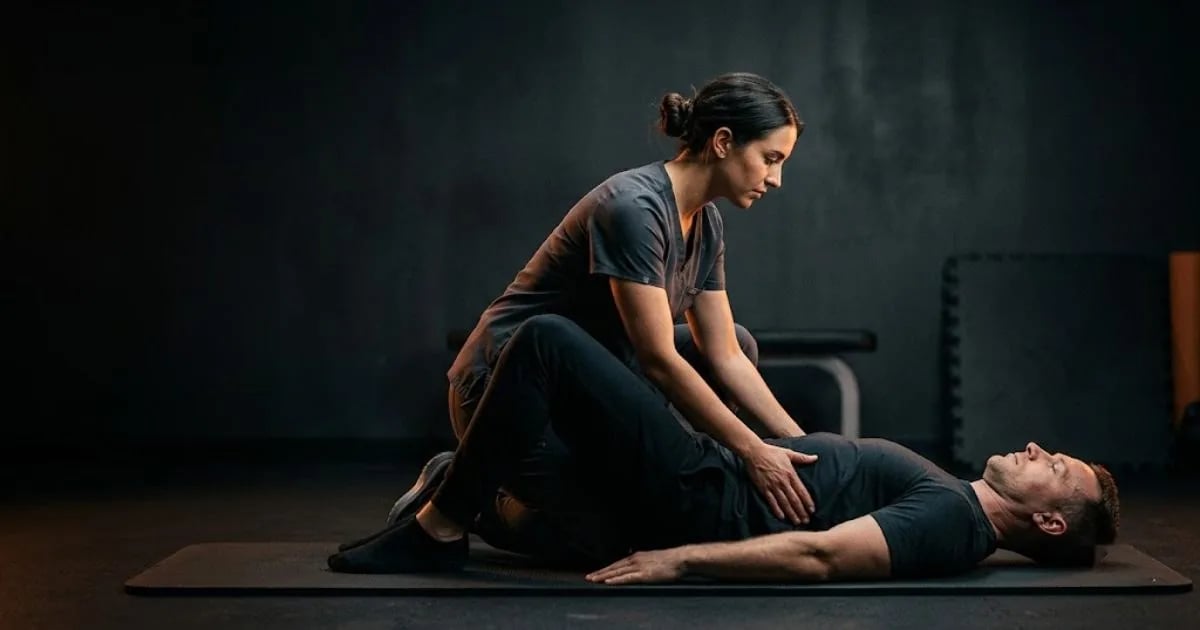
Few things frighten people more than a diagnosis of a herniated disc, and the right exercises for a herniated disc can be the difference between fearing movement and rebuilding a strong, capable back. I work with many clients in Vogošća and Sarajevo who come to me nervous about their backs, often having been told to simply rest and avoid activity. In most cases that advice is outdated. The path back to a pain-free life usually runs through smart, progressive movement, not endless rest.
Before we go further, an important note: this article is general education, not a medical diagnosis or treatment plan. A herniated disc should be assessed by a doctor or physiotherapist, and you should get clearance before starting any exercise program. What follows is the general approach I use once someone is cleared to train.
Understanding a herniated disc and low back pain
The discs between your vertebrae act as cushions. A herniated or bulging disc is when the softer inner part pushes outward, which can irritate nearby nerves and cause pain, and sometimes tingling or weakness down the leg. It sounds alarming, but here is the reassuring truth I share with every client: disc bulges are extremely common, they show up on scans of people with no pain at all, and the body has a real capacity to calm the irritation and heal over time.
The goal of training is not to force the disc back into place. It is to reduce the irritation, build the strength and control that support your spine, and gradually restore your confidence in moving.
What to avoid, at least early on
In the acute, painful phase, certain movements tend to aggravate a disc issue and are best avoided until things settle.
- Repeated end-range bending forward, especially first thing in the morning when discs are more hydrated.
- Heavy lifting with a rounded back, which loads the disc in the most vulnerable position.
- Loaded twisting under weight, which combines the movements the disc likes least.
- Prolonged sitting without breaks, which keeps the spine in a sustained flexed position.
Avoiding these is temporary, not forever. As you get stronger and symptoms calm, we gradually and carefully reintroduce bending, lifting and rotation so your back becomes robust rather than fragile.
Core work that actually helps
When people think of core training for the back, they often picture crunches and sit-ups, which are usually the wrong choice for a sensitive disc. What the spine needs is stability: the ability to stay solid while your arms and legs move. This is the foundation of protecting the disc.
Gentle, spine-friendly exercises
- Dead bugs: lying on your back, moving opposite arm and leg while keeping your spine still and braced.
- Bird dogs: on all fours, extending opposite arm and leg without letting the lower back sag or twist.
- Planks and side planks: built up gradually, training the trunk to resist movement.
- Modified curl-ups that keep the lower spine in a neutral position.
These build the deep support your spine relies on without the repeated bending that irritates a disc. Done consistently, they are quietly powerful, and they are among the first things I introduce once a client is cleared to train. If you want that progression built for your specific case, you can see how I work.
Do not forget the hips and glutes
A huge amount of low back pain has a hidden source: weak, underused glutes and stiff hips. When your hips do not do their job, your lower back is forced to take up the slack in lifting, walking and bending. Building strong glutes and mobile hips takes a great deal of stress off the spine.
- Glute bridges and hip thrusts to wake up and strengthen the glutes.
- Hip hinge practice to learn to bend from the hips, not the lower back.
- Hip mobility drills to restore range that stiff hips have lost.
Teaching people to move from their hips rather than cranking through their spine is one of the most valuable things I do, and it protects the back far beyond the gym. This overlaps closely with corrective exercise, which I explain in my article on what corrective exercise is and who needs it.
The role of walking and gentle movement
One of the best things you can do for a sore back is walk. Gentle, regular walking pumps blood to the area, keeps you from stiffening up, and reassures your nervous system that movement is safe. Many clients are surprised at how much a few short daily walks help. Movement, kept within a comfortable range, is medicine for most backs.
Rebuilding strength for the long term
Once symptoms settle, the goal shifts from calming things down to building a back that can handle life. That means gradually and carefully reintroducing loaded movements like hip hinges and deadlifts with good technique, so that lifting a child or a heavy bag never feels risky again. A strong back is a resilient back, and strength training done properly is protective, not dangerous. The key word throughout is gradual: we respect where you are and progress at a pace your body can handle.
The mental side of back pain
There is a part of back recovery that rarely gets mentioned but matters enormously: your relationship with fear. When your back hurts badly, it is natural to become protective and to start seeing your spine as fragile, avoiding more and more movements. The trouble is that this fear itself keeps you stiff, weak and sensitised, and it can prolong pain long after the original problem has calmed. A great deal of persistent back pain is driven as much by this guarding as by any structural issue.
Part of my job, alongside any physiotherapist you work with, is to gradually rebuild your confidence in your own body. As you prove to yourself, week by week, that you can move, load and bend without disaster, the fear fades and the back often follows. This is why I never rush a client and never push into sharp pain, but I also do not let them wrap their back in cotton wool forever. The destination is a body you trust, and that trust is built through graded, successful movement.
Consistency is what heals
Recovery from a disc issue is rarely quick, and it is rarely a straight line. There will be good days and frustrating ones, and small flare-ups are a normal part of the process rather than a sign of failure. What matters is the trend over weeks and months, and that trend is shaped by consistency. A few minutes of the right exercises done most days will do far more for your back than an occasional intense session followed by nothing. Slow, steady and consistent wins here, and it is worth the patience.
When to see a professional
Please seek medical attention promptly if you have severe or worsening leg weakness, numbness in the saddle area, or any loss of bladder or bowel control, as these can signal a serious problem. Short of that, a physiotherapist and an experienced coach working together can guide most people back to a full, active life. In my work I always stay within my lane, coordinate with medical advice, and build the strength side of your recovery once you are cleared. If a herniated disc has left you afraid to move, know that a stronger, more confident back is genuinely within reach.
The best results come from training built around your body and your goals, whether that is fat loss, coming back from an injury, or preparing for a test. I coach people in Vogošća and Sarajevo, and online across Bosnia. If you want a plan made specifically for you, see how I work and get in touch.
FAQ
- Should I rest completely if I have a herniated disc?
- Usually not. Prolonged rest tends to make things worse by allowing you to stiffen and deconditioning your back. Most people recover better with gentle movement, walking and progressive exercise once cleared by a doctor or physiotherapist. Always get assessed first.
- Which exercises are safest for a herniated disc?
- Stability-focused work like dead bugs, bird dogs and planks, plus glute and hip strengthening, tends to be well tolerated. These build the support your spine needs without repeated bending. This is general guidance, so get individual clearance before starting.
- Can I lift weights again after a disc injury?
- In most cases, yes, and it is often protective. Once symptoms settle, loaded movements like hip hinges are reintroduced gradually with good technique so your back becomes stronger and more resilient. Progress carefully and ideally with professional guidance.